
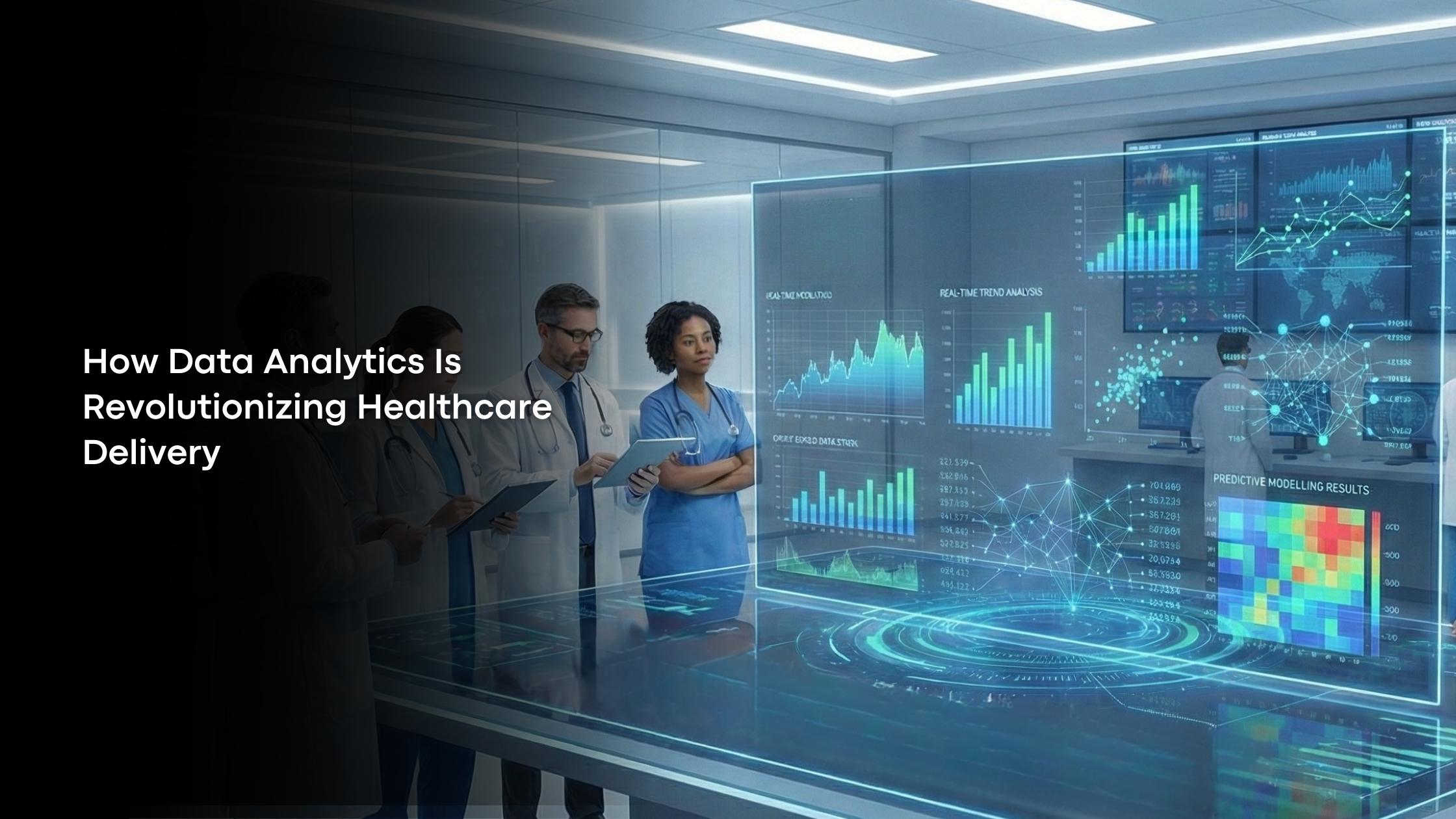
Every industry today, including healthcare, relies heavily on technology. Among the most transformative forces reshaping the healthcare sector is data analytics.
Studies show that the market of data analytics in healthcare is expected to grow into a multi-billion-dollar industry. This growth will be driven by its ability to improve patient care, reduce costs, and enhance operational efficiency for healthcare providers and institutions.
As a result, the adoption of data analytics in healthcare has become essential rather than optional. Read on to understand how data analytics is transforming healthcare and redefining the way medical decisions are made.
Understanding Data Analytics for the Healthcare Industry
The past few years have seen significant change, especially in the healthcare sector. The healthcare data management has already changed from a reactive to a proactive, data-driven strategy.
This is due to changing medical conditions, improvements in healthcare technologies, and an increasing awareness of illness prevention. Simultaneously, this shift has led to an increase in medical expenses and experimentation.
This exposes inefficiencies in the distribution of resources and reveals the growing burden of chronic illnesses.
Are you wondering what made the aforementioned inefficiencies apparent? Massive amounts of healthcare data and the insights gleaned from its analysis are the obvious response.
Drug development, hospital administration, remote patient monitoring, processing claims, and predictive risk modeling are all now heavily reliant on patient outcomes analytics.
Due to its widespread presence, the healthcare industry now has a sizable market for data analytics, which is predicted to expand at a good rate over the next five years. Now, investigate this specialized market to observe how patient care and healthcare delivery are changing.
How Data Analytics is Transforming the Healthcare Industry?
The usage of data assets has changed the healthcare sector greatly. Some areas where data has helped healthcare include:
Predictive Analytics Aiding the Prevention of Diseases
In the healthcare industry, predictive analytics is an increasingly common application of data analytics. It is possible to identify patterns and trends that healthcare service providers aren’t immediately aware of by leveraging past patient care data.
These insights can be used by professionals to forecast disease outbreaks, the extent of patient readmissions, and several dangers related to specific patients.
Improved Patient Care and Scope of Personalization
Healthcare providers are able to offer more individualized and patient-centered facilities with the support of actionable insights obtained from patient data.
Large volumes of patient health data, such as test results, treatment plans, and medical histories, can be recorded in Electronic Health Records (EHRs). Healthcare professionals use this data analysis to tailor interventions and treatment strategies to each patient’s particular medical needs.
Streamlined Healthcare Operations
Healthcare procedures and resource allocation optimization are possible if you use data analytics. Every day, hospitals and healthcare service groups deal with a huge amount of data. This easily includes billing, inventory management, staffing scheduling, and patient admissions.
By analyzing this data, operational bottlenecks are pinpointed, steps are improved, and costs are reduced.
Drug Discovery and Development
The route map for discovering new drugs is lengthy, costly, and comes with risks. Data analytics changes the steps by more effectively identifying the right candidates for drug trials.
Scientists and researchers can easily and precisely identify useful compounds with the help of automated analysis of genetics, clinical trials, and drug data.
Fraud Detection
With millions and billions of dollars spent each year on fraudulent claims, identity theft, and cases of overbilling, fraudulent transactions are incredibly common in the payer and provider analytics sector. In order to tackle instances of healthcare fraud, data analytics is essential.
Research projects that the global market for healthcare fraud analytics will expand steadily between 2022 and 2028.
Analytics is essential for identifying instances of fraud since it allows for the analysis of claims data, patient health histories, and billing trends using algorithms that are intended. It helps identify anomalies and reveal possibly fraudulent activity.
Use Cases for Big Data in Healthcare
Real-Time Alerts
Instant alerts record patient health information in real time, helping doctors to make more accurate decisions.
EMR Systems
Global access to medical information is made possible by electronic medical record software. Patients can review themselves and provide relevant details to medical experts.
Remote Patient Monitoring
Wearable technology reduces lengthy hospital stays by gathering patient vital signs and allowing physicians to remotely check health issues.
Customized Treatment Plans
When creating a customized treatment plan and delivery timetable for a quicker patient recovery, data analytics is relied on.
The use of data analytics in healthcare has the potential to completely transform the sector, from anticipating disease outbreaks to optimizing operations and enhancing patient care.
Healthcare providers, researchers, and institutions would be able to make informed choices more swiftly with the help of the combined power of data and the sophisticated analytics solutions selected by data experts.
The potential of big data in healthcare revolutionizes the healthcare sector and ensures a better and healthier future. Benefits will increase as technology advances and healthcare data architecture is developed.
Ensuring Compliance and Ethical AI in Healthcare Analytics
Working with important regulations is essential for using data analytics in healthcare. Regulations ensure proper data handling and patient privacy. Most analytics platforms today come with privacy-focused tools like federated learning.
With them, models face training using decentralized data with no centralization of private data, and this easily reduces breach risks.
Ethical AI governance is a must, and it offers tools for biases seen in algorithms. They could create errors in the diagnostic precision for underrepresented human groups. The presence of strong audit trails and bias detection algorithms helps with fairness.
Final Thoughts
Finally, understand that you need to work with a reliable service provider to achieve success in data analytics for healthcare. If you want to enjoy revolutionary IT solutions, contact Sira Consulting because they rely on teamwork and innovation.
Regardless of project size, teams at Sira Consulting help organizations in different locations.
Sira Consulting supports client success with a focus on data engineering, data analytics, cloud integration, automation, and AI solutions. If you partner with experts like Sira Consulting, you can guarantee compliant, ethical implementations that create trust and help avoid penalties in healthcare delivery.